

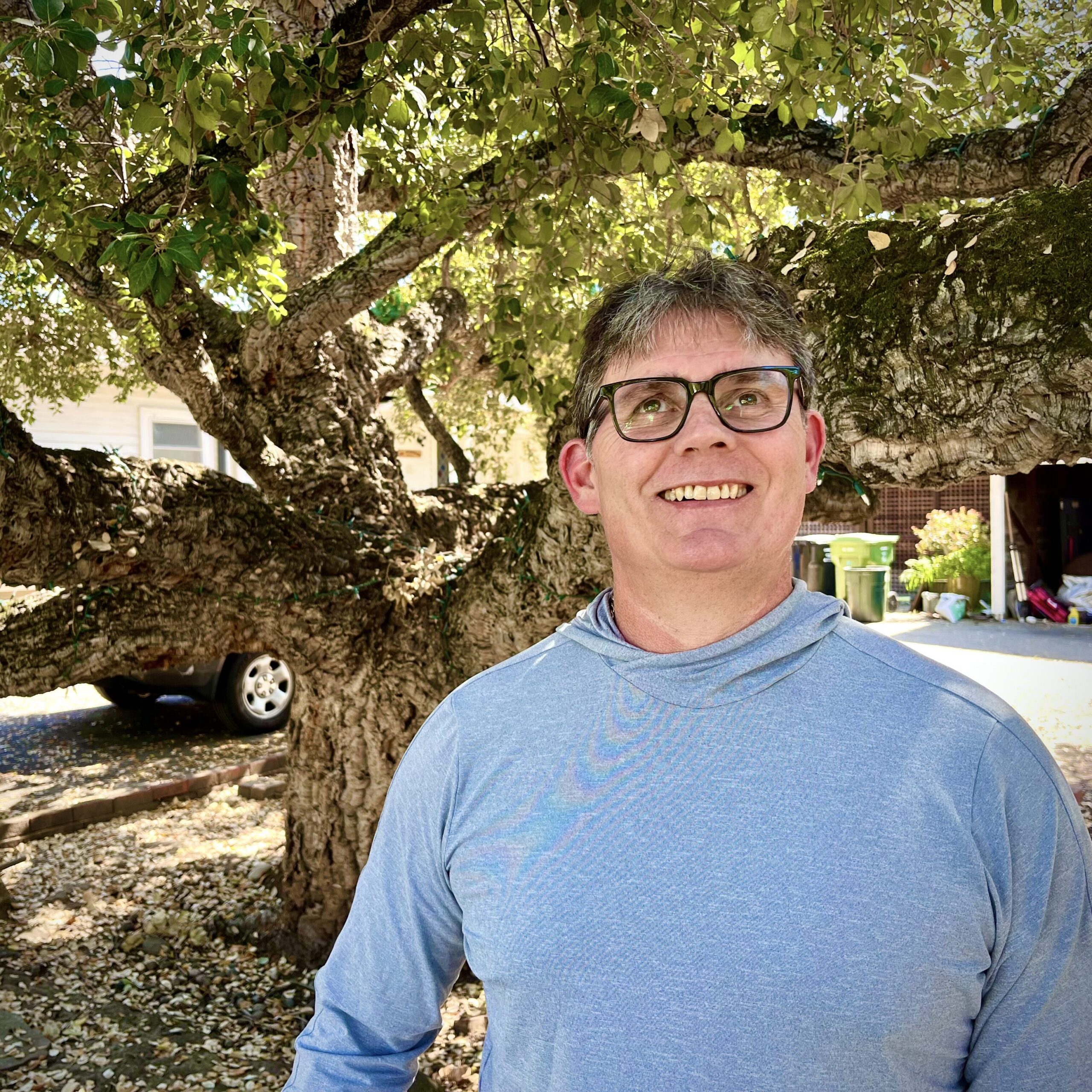
Ian McLaughlin once lived a life defined by movement—both physically and professionally. Raised in Santa Rosa, California, he built a career in law and public policy, focusing on improving public health in underserved communities. He was deeply engaged in civic life, served on Walnut Creek’s Park, Recreation, and Open Space Commission, and stayed active as a tennis player, backpacker, and coach for his sons’ youth sports teams. Alongside his wife, Starr, and their two boys, Ian’s life was full, active, and rooted in community.
In September 2016, that life changed in an instant.
While attending a conference in Atlanta, Ian suffered a series of three strokes over two days; the first came shortly after he delivered a presentation. By the next morning, Ian experienced a massive stroke and was later airlifted to a specialized stroke center, where surgeons performed emergency brain surgery to remove blood clots. During the procedure, he suffered the third stroke and spent nearly a month in a coma.
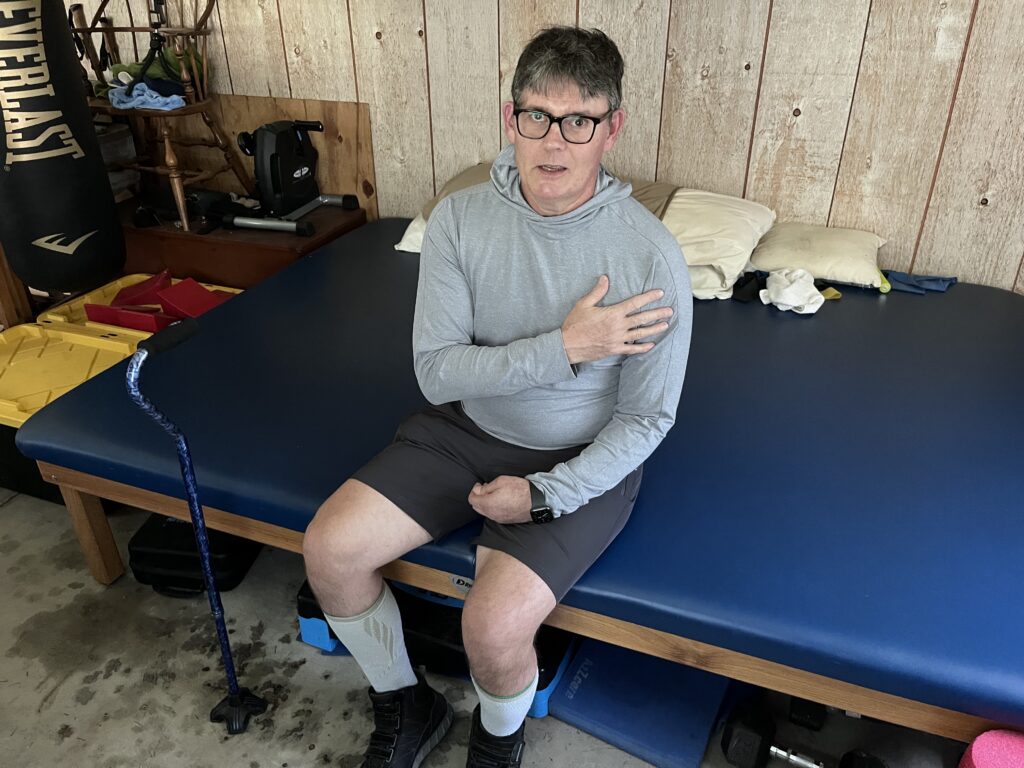
When Ian returned to California, he faced a new reality: he was completely paralyzed on the left side of his body. He could not walk or perform even basic daily tasks independently. Multiple surgeries followed, including a long and uncertain process to reconstruct part of his skull, which had been removed to reduce brain swelling. The physical challenges were immense—but the emotional adjustment proved just as difficult.
After months in a rehabilitation hospital, Ian returned home, where the weight of his new limitations fully set in. Once independent and constantly active, he now relied on caregivers for nearly everything. “It felt like my previous life was gone,” he recalls. Isolation and depression became significant hurdles in his recovery.
Each day was filled with physical, occupational, and speech therapy. Progress came in small increments—learning to transfer from a bed to a chair, taking a few assisted steps, gradually regaining balance and coordination. Ian began to embrace what would become his guiding philosophy: progress happens “inch by inch.”
But regaining mobility inside the home was only part of the journey. Re-entering the community—and doing so independently—was another challenge entirely. For the first couple of years, Ian depended on caregivers not only for daily needs but also for transportation. While necessary, this level of dependence was costly and emotionally difficult. Ian longed to regain the ability to go places on his own.
Because of vision loss caused by his strokes, driving was no longer an option, and rideshare services were expensive. Then, Ian learned about paratransit services available in his community, offered through County Connection Link Paratransit, a shared-ride service for those unable to use regular buses due to disability or serious health conditions. “That discovery changed everything,” he says.
Ian began using paratransit to travel independently for the first time since his strokes. What might seem like a simple service became a transformative milestone in his recovery. “It opened up a whole new world,” Ian explains. “I could go to appointments, therapy, even run errands—on my own schedule, without needing someone with me.”
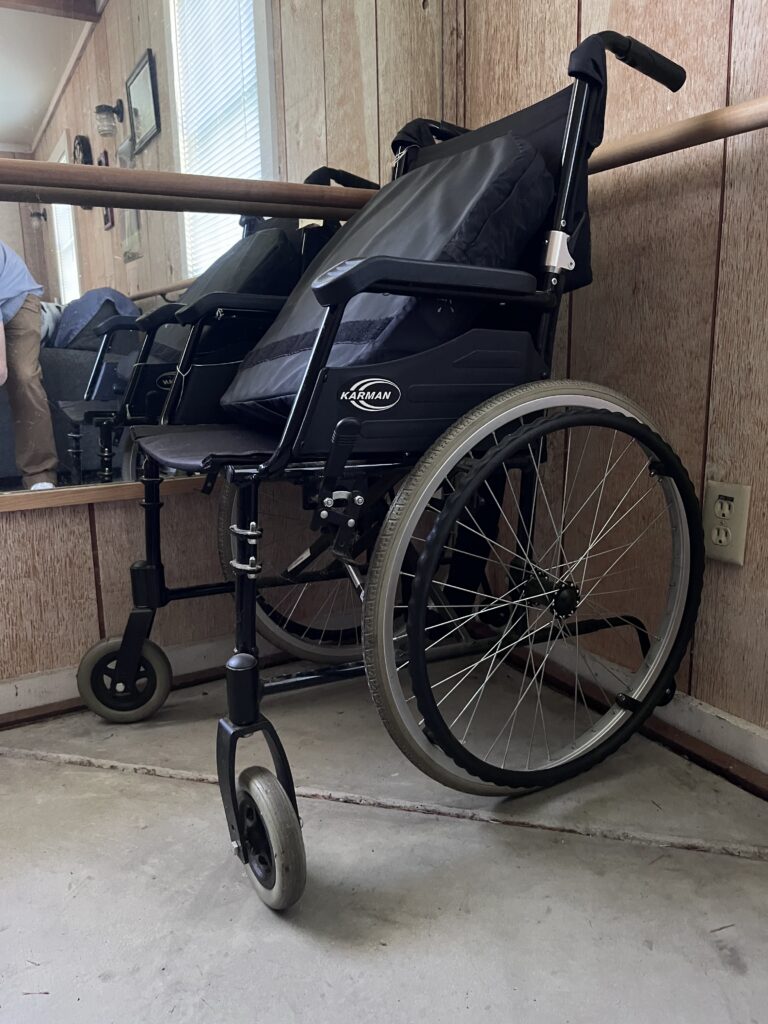
At first, using the service required courage. Ian was still regaining confidence in his mobility and often brought his wheelchair along, even as he practiced walking with a cane. Paratransit operators helped him safely board and exit the vehicle, treating him with professionalism and respect. Over time, as his strength and balance improved, he began traveling with just his cane (another sign of progress).
Beyond the practical benefits, public transportation restored something deeper: a sense of agency. “Just being able to make decisions for myself again—where to go, when to leave—that was huge,” he says. “It made me feel like part of the world again.”
Paratransit became a critical tool in Ian’s ongoing recovery, enabling him to stay engaged in his community, continue rehabilitation, and rebuild independence step by step. It also provided a cost-effective alternative to private transportation, making regular outings sustainable.
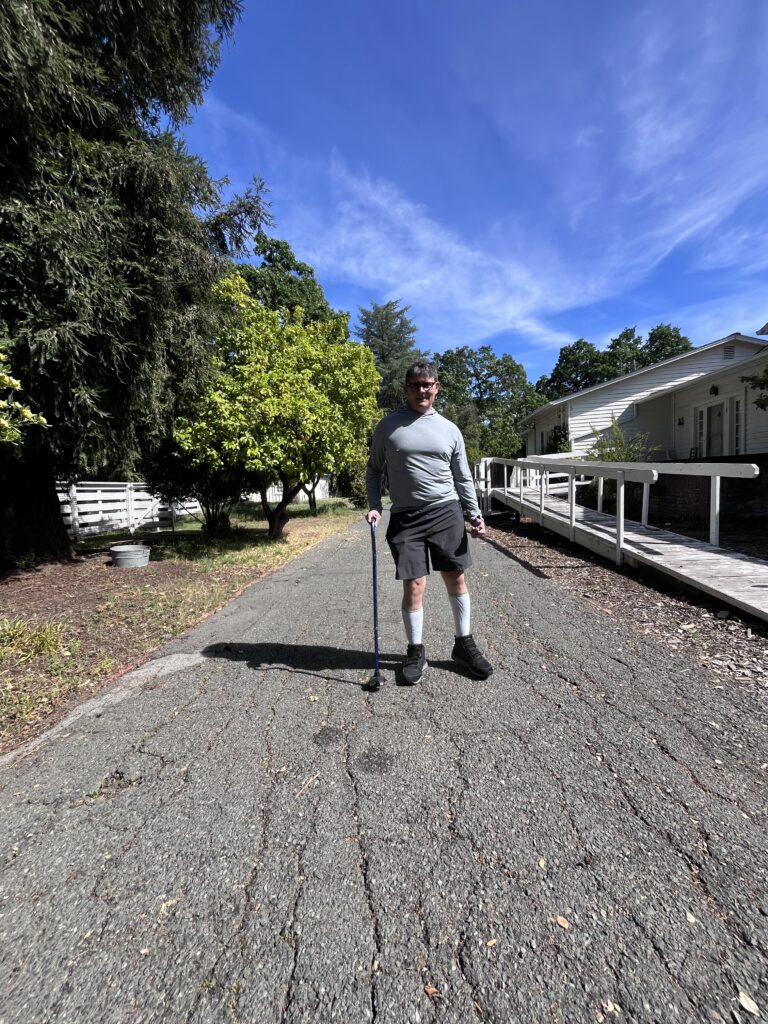

Today, Ian continues to set new goals. One of his next milestones is to try regular bus services and eventually navigate systems like regional rail on his own—challenges he sees as opportunities to keep growing.
For others facing mobility or cognitive challenges, Ian offers encouragement: don’t hesitate to explore public transportation options. “The process is much easier than you might expect,” he says. “The operators are compassionate, patient, and well-trained. They make it feel safe and dignified.”
Ian’s journey is ultimately one of resilience—not just in relearning how to walk, but in reclaiming independence and identity. His advice to others facing life-altering setbacks is simple: practice patience, stay positive, and remain persistent. Progress may be slow. But as Ian’s story shows, even the smallest steps forward can lead to something life changing. In his case, those steps were made possible not only by determination and support, but by something as simple as accessible public transit.

You can learn more about Ian McLaughlin’s story in his book, Inch by Inch: My Journey of Recovery and Discovery After, available on Amazon. If you or someone you know is interested in County Connection Link Paratransit services, please visit countyconnection.com/paratransit for details on paratransit services in central Contra Costa County.
Are you a transit enthusiast? Casual rider? We’d love to share your perspective on how public transit shapes your day. Reach out to our Marketing Department at marketing@cccta.org and let us know about your story!