County Connection

News Archive

Real-Time Bus Arrival Signs Installed 

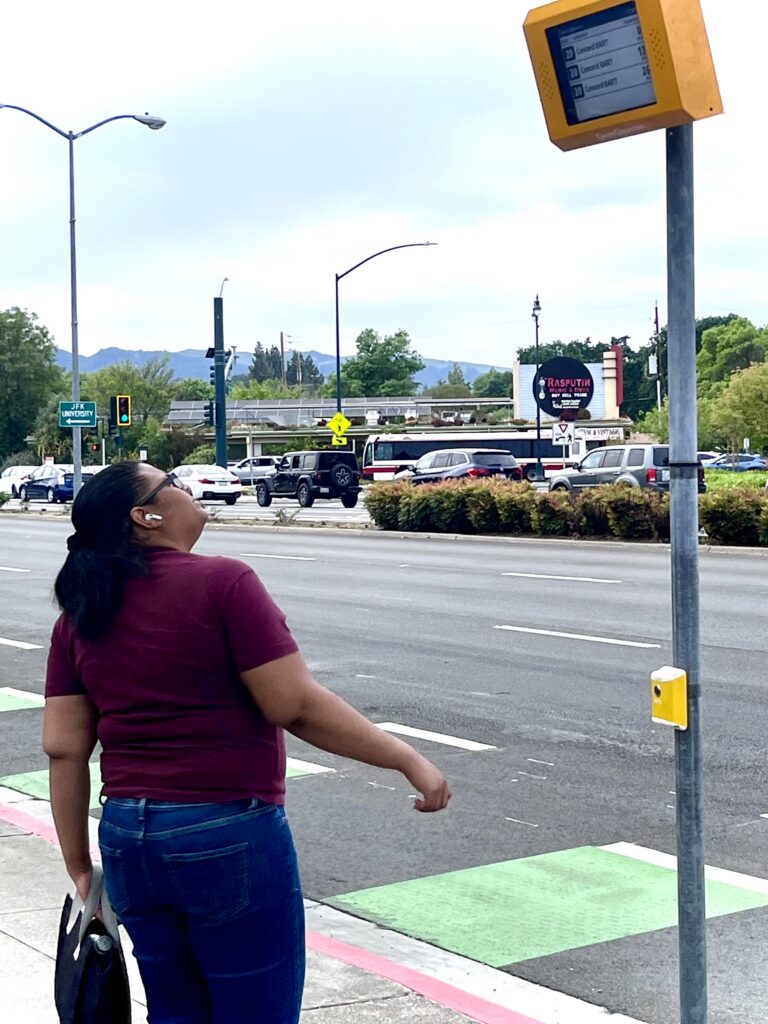
Real-time sign installed along Route 20, displaying County Connection bus arrival times.

Good news for County Connection riders—real-time bus arrival signs are now live at some of our busiest stops across central Contra Costa. If you’ve ever found yourself wondering, “Did I just miss the bus?” or “How much longer do I have to wait?”—we’ve got you covered. Our newly installed signs take the guesswork out of riding. How? They show exactly when your bus will arrive, with updates in real-time, roughly every minute. 

This upgrade builds on an earlier set of real-time signs first introduced in 2016. After seeing how helpful those were for riders, we evaluated what was working and looked for ways to make the passenger experience even better. The results are these 28 brand-new, modern displays designed with you—our riders—in mind.  

The new signs feature easy-to-read 13-inch e-paper screens (an easy-to-read low-power consumption display, similar to an Amazon Kindle e-reader) that stay clear and visible in all lighting conditions…whether you’re catching an early morning ride or heading home after dark. They’re also built to last, with vandal-resistant enclosures to keep them reliable for the long haul. 

Accessibility was a key part of this upgrade. Each sign includes text-to-speech functionality, making it easier for visually impaired riders to hear real-time arrival information with the push of a button (literally).  

You might notice these signs aren’t solar-powered like the previous ones—and that’s intentional. Advances in battery technology mean these displays can run for three to five years on a single battery, allowing us to install them in more locations without worrying about sun exposure or higher costs. 

We’ve placed the 28 signs where they can make the biggest impact by installing them at our stops with the greatest number of boardings. We also made sure to install at least one sign in each of the cities we serve where there is a stop averaging at least ten boardings per day. That means more riders in more places can benefit from real-time information. 

You’ll now find these signs in communities including Clayton, Concord, Pleasant Hill, Martinez, Moraga, San Ramon, Walnut Creek (coming soon), and Danville—at key stops along corridors like Clayton Road, Monument Boulevard, Contra Costa Boulevard, and Treat Boulevard, as well as near major destinations like medical centers, park-and-ride lots, and college campuses. 

You may notice that stops at BART stations and major transit centers aren’t included just yet. Those locations are part of a larger regional effort led by the Metropolitan Transportation Commission, with updates coming in the future. 

This project was funded through County Connection and delivered through a cooperative agreement with the California Association for Coordinated Transportation (CalACT), helping us bring this technology to riders efficiently and cost-effectively. Whether you’reheading to work, school, or anywhere in between, real-time information helps you plan with confidence. 

So next time you’re at the stop, take a look up—your bus may be close by (and now you’ll know exactly when it gets there). 


Have you seen one of our real-time signs? Whatdya think? We’d love to hear your feedback! Email your thoughts (and even photos of you with a real-time sign) to marketing@cccta.org.
Ask Andy: How do I know when my bus is coming? 

As a genuine transit geek, I could talk all day about what goes on behind the scenes in running a transit system, but the one question we’re asked more than any other is “when is my bus coming?”. We have several ways of letting you know: 

Printed timetables

If you want to go old-skool, there’s our tried-and-true printed timetables. Some of you will remember when printed timetables were just about the only way to know when your bus would arrive, and we still provide these on our buses and at libraries, community centers, and city halls (they may also be downloaded from our website). These timetables tell you when the bus is scheduled to arrive at the timepoints along the route (timepoints are bus stops where the bus will stop and wait if it is running ahead of schedule), but you’ll always want to make sure you have the most up-to-date version.

  • (If you need any printed timetables, they’re available at County Connection, 2477 Arnold Industrial Way in Concord and at various locations around Contra Costa County. Or, you may email us customerservice@cccta.org, and we’ll be glad to mail you what you need.)

Schedule panels

About half of our bus stops have schedule panels showing the arrival times for each route serving that stop (or the previous timepoint for stops that aren’t themselves a timepoint). We typically install schedule panels at bus stops served by more than one route, and at all BART stations and transit centers. They’re a great way to confirm that you’re at the right stop at the right time, but they won’t tell you if the bus is running late. Each timetable is specific to the location of the stop.

Call customer service

We have a dedicated in-house team of friendly and helpful customer service representatives who know all of our routes, are in frequent contact with our dispatchers, can tell you where your bus is, help you plan your trip, or even check to see if something you left on the bus has been turned in to lost & found.  You can call them at (925) 676-7500, Monday through Friday between 6:30 am and 6:30 pm. They look forward to hearing from you! 

Real-time arrival signs

Here’s where we get into some new technology! We recently installed electronic real-time arrival signs at 28 of our busiest stops, and we have an entire article written about them (See Real-Time Bus Signs Installed for more information and a detailed map of current location of these signs).  

County Connection website

Our website has schedules for all of our routes, plus interactive route maps that show the current location of each bus. You can watch your bus as it moves along the route in real time (visit specific route pages), and you can click on your bus stop for real-time arrival estimates. Just visit countyconnection.com and select “Maps & Schedules” from the menu at the top. You can also download our system map to get the overall picture of our entire system (something enjoyed by map nerds such as myself). 

Google/Apple maps

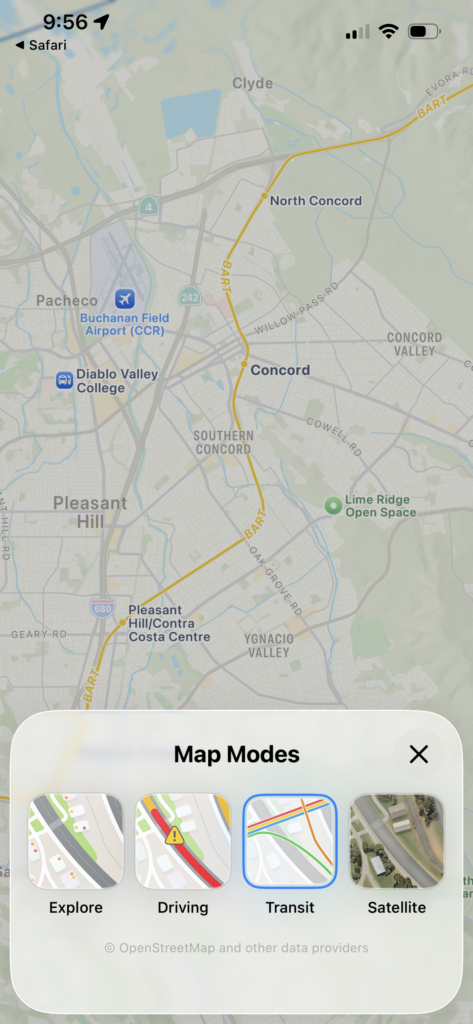
In addition to a trip planner, both apps (Google Maps and Apple Maps) include a public transit map layer (you’ll find it right next to the traffic layer) that features the location of every bus stop and transit station. Tapping on a bus stop will bring up real-time arrival information for every route that stops there. 

Transit app

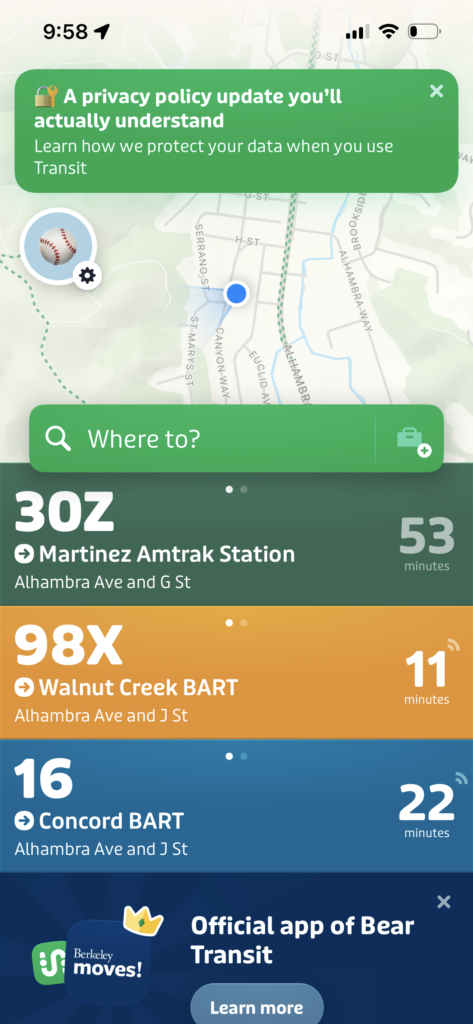
My personal favorite, the Transit app is designed specifically for transit riders. From the start, it automatically shows you the transit routes closest to your current location and their next arrival time.  Clicking on a route opens an interactive route map showing the current location of each bus, its full schedule, and even in some cases how full it is. The app also features a robust trip planning tool that will usually provide you with several options, and it will even tell you when to start walking to your bus stop.  Now covering the Bay Area over a decade, the Transit App changed the way I use transit by greatly simplifying trip planning, reassuring me that the bus I’m waiting for is on its way, and even letting me know that I can take a more leisurely walk to my bus stop if it’s running a few minutes late. I recently used the app to take a trip to South San Francisco that included County Connection, BART, Muni, and Caltrain (with seamless connections between all four operators), and over the years I’ve used the app across the United States and abroad (because of course I take transit when I travel!). 

We’ve come a long way from the days when you had to find a printed schedule and then wait at the bus stop, not knowing where your bus was until you could see it up the block.  Online tools have greatly improved my transit experience, and they will likely do the same for you! 

Please note: this article is not sponsored by Google, Apple, or the Transit App. 


Andrew Smith is the Director of Planning & Marketing. Do you have question about County Connection? About our buses? About our routes and service? Email asmith@cccta.org and your question might be included in a future issue of our monthly newsletter, Headways.

Rider Spotlight: Ian McLaughlin’s Resilient Journey

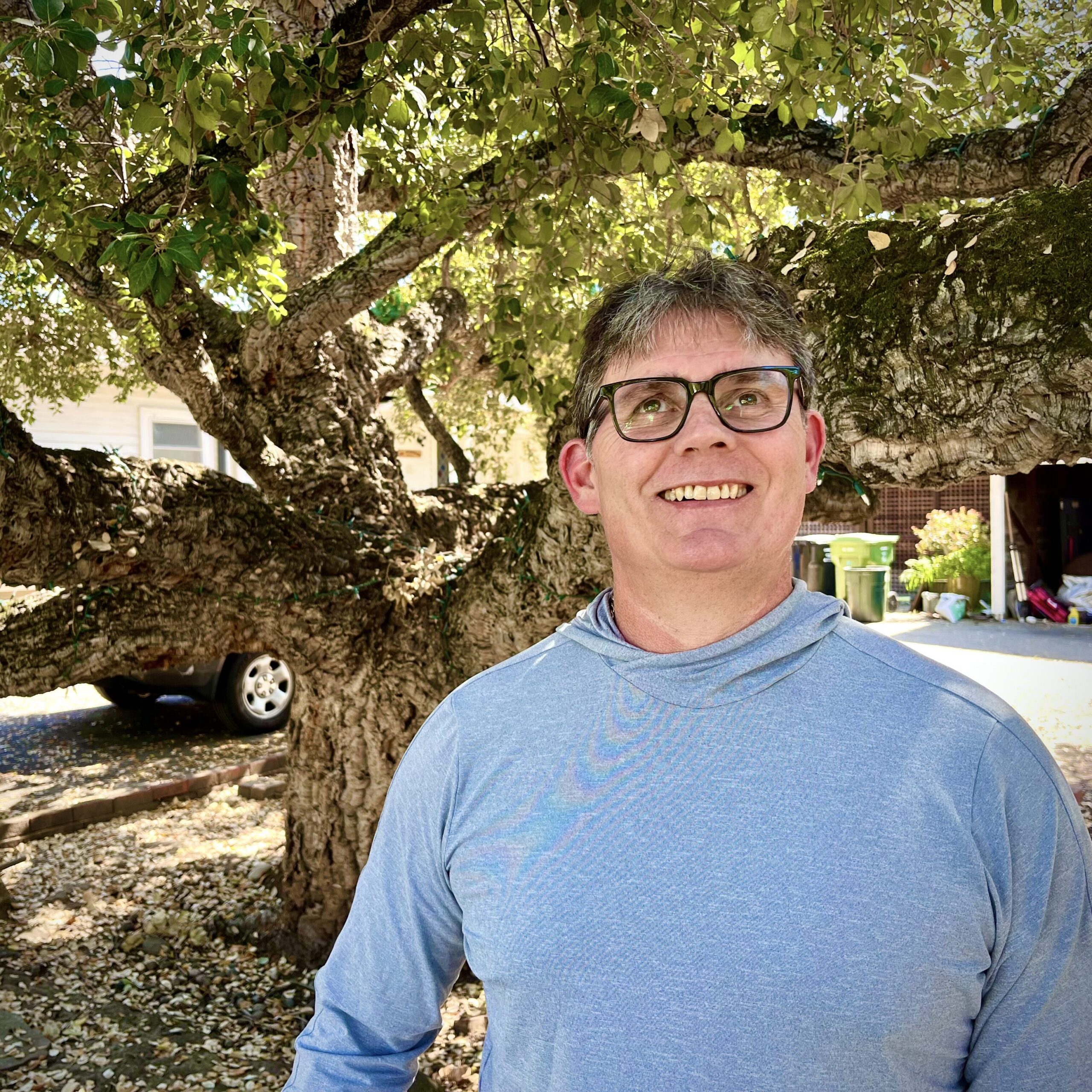
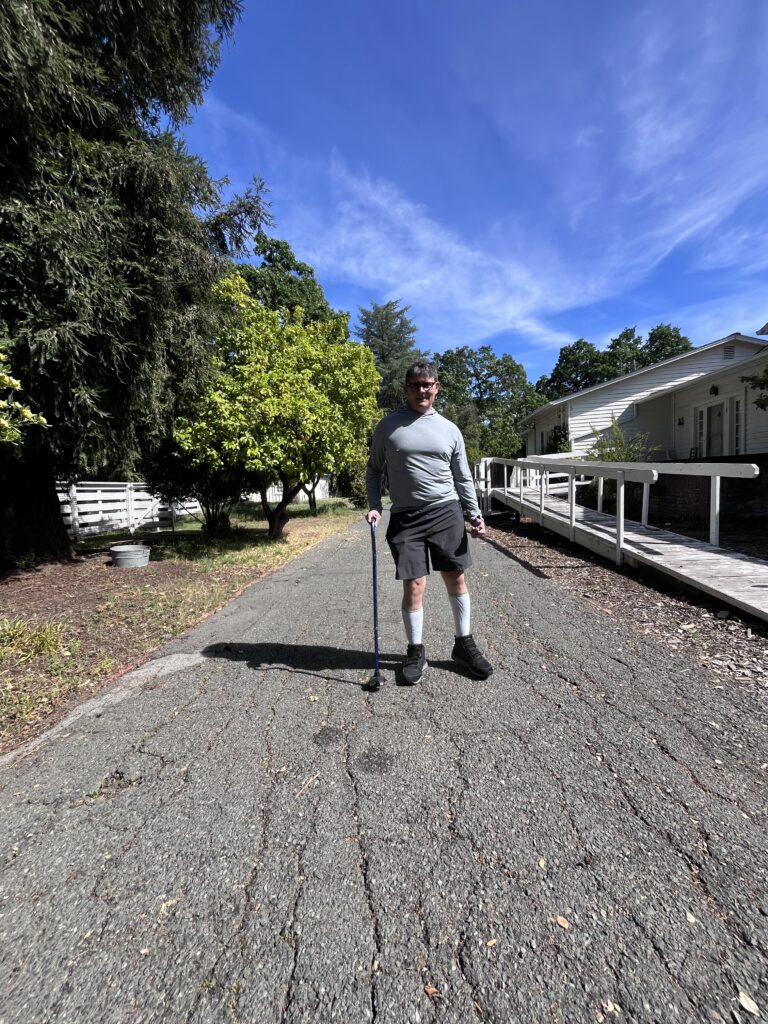
Image of Ian McLaughin at his home.
Ian at home in Walnut Creek, standing in front of a 100+ year old cork oak tree.

Ian McLaughlin once lived a life defined by movement—both physically and professionally. Raised in Santa Rosa, California, he built a career in law and public policy, focusing on improving public health in underserved communities. He was deeply engaged in civic life, served on Walnut Creek’s Park, Recreation, and Open Space Commission, and stayed active as a tennis player, backpacker, and coach for his sons’ youth sports teams. Alongside his wife, Starr, and their two boys, Ian’s life was full, active, and rooted in community.

In September 2016, that life changed in an instant. 

While attending a conference in Atlanta, Ian suffered a series of three strokes over two days; the first came shortly after he delivered a presentation. By the next morning, Ian experienced a massive stroke and was later airlifted to a specialized stroke center, where surgeons performed emergency brain surgery to remove blood clots. During the procedure, he suffered the third stroke and spent nearly a month in a coma. 

When Ian returned to California, he faced a new reality: he was completely paralyzed on the left side of his body. He could not walk or perform even basic daily tasks independently. Multiple surgeries followed, including a long and uncertain process to reconstruct part of his skull, which had been removed to reduce brain swelling. The physical challenges were immense—but the emotional adjustment proved just as difficult. 

After months in a rehabilitation hospital, Ian returned home, where the weight of his new limitations fully set in. Once independent and constantly active, he now relied on caregivers for nearly everything. “It felt like my previous life was gone,” he recalls. Isolation and depression became significant hurdles in his recovery. 

Each day was filled with physical, occupational, and speech therapy. Progress came in small increments—learning to transfer from a bed to a chair, taking a few assisted steps, gradually regaining balance and coordination. Ian began to embrace what would become his guiding philosophy: progress happens “inch by inch.” 

But regaining mobility inside the home was only part of the journey. Re-entering the community—and doing so independently—was another challenge entirely. For the first couple of years, Ian depended on caregivers not only for daily needs but also for transportation. While necessary, this level of dependence was costly and emotionally difficult. Ian longed to regain the ability to go places on his own. 

Because of vision loss caused by his strokes, driving was no longer an option, and rideshare services were expensive. Then, Ian learned about paratransit services available in his community, offered through County Connection Link Paratransit, a shared-ride service for those unable to use regular buses due to disability or serious health conditions. “That discovery changed everything,” he says. 

Ian began using paratransit to travel independently for the first time since his strokes. What might seem like a simple service became a transformative milestone in his recovery. “It opened up a whole new world,” Ian explains. “I could go to appointments, therapy, even run errands—on my own schedule, without needing someone with me.” 

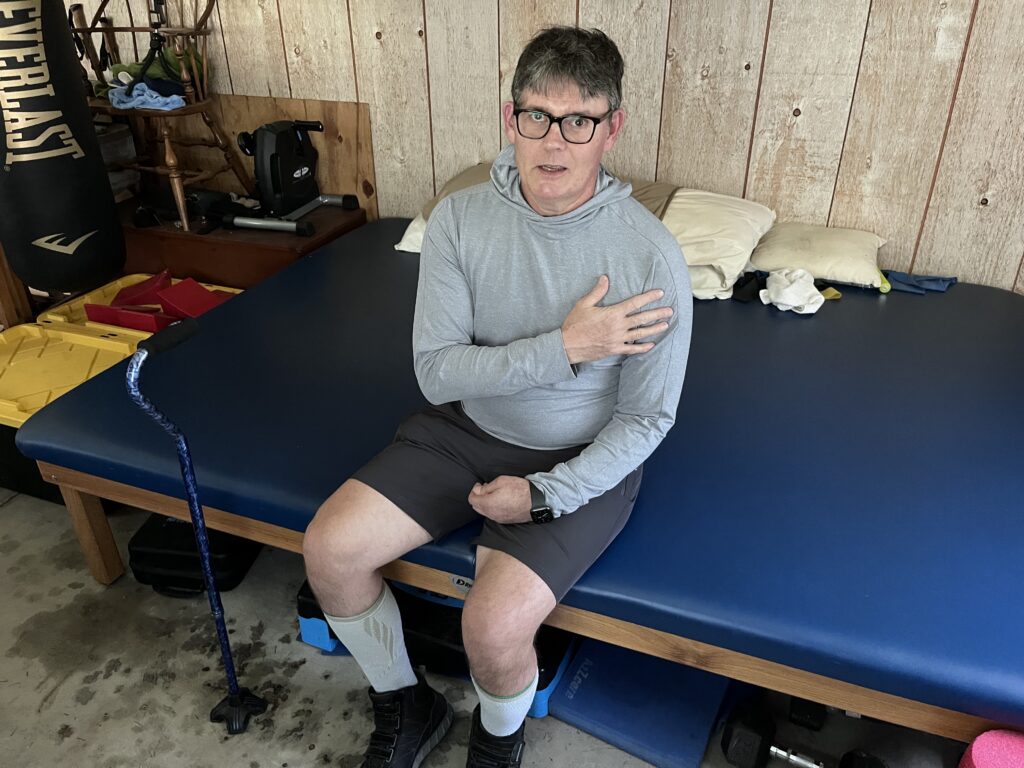
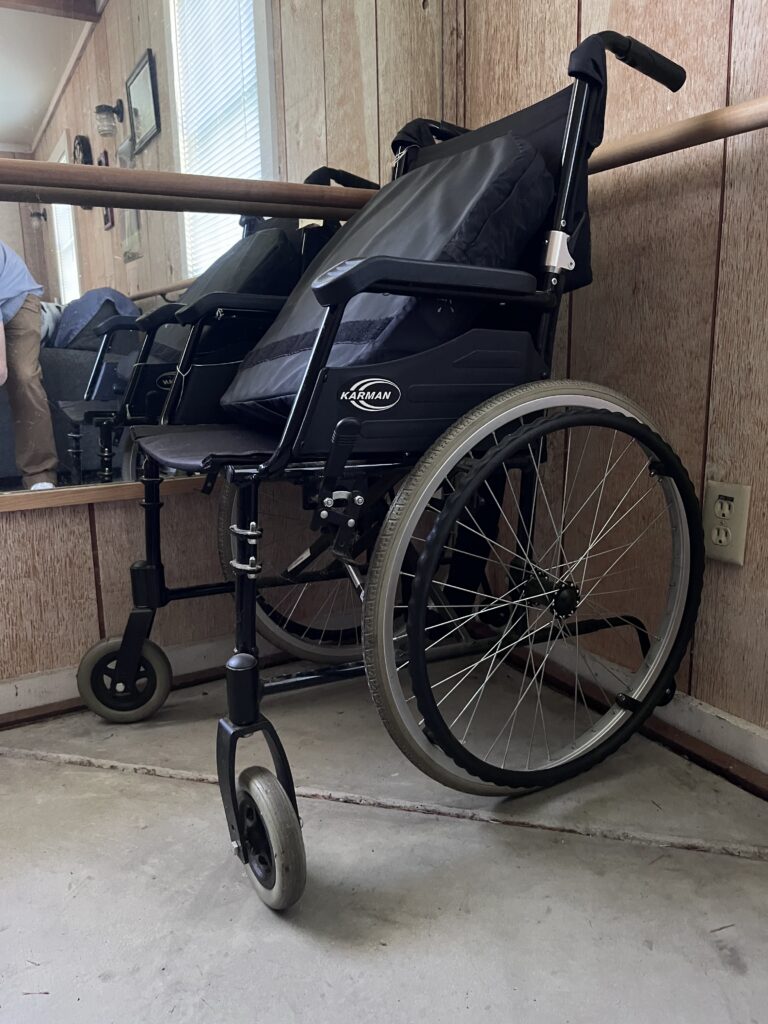
At first, using the service required courage. Ian was still regaining confidence in his mobility and often brought his wheelchair along, even as he practiced walking with a cane. Paratransit operators helped him safely board and exit the vehicle, treating him with professionalism and respect. Over time, as his strength and balance improved, he began traveling with just his cane (another sign of progress). 

Beyond the practical benefits, public transportation restored something deeper: a sense of agency. “Just being able to make decisions for myself again—where to go, when to leave—that was huge,” he says. “It made me feel like part of the world again.” 

Paratransit became a critical tool in Ian’s ongoing recovery, enabling him to stay engaged in his community, continue rehabilitation, and rebuild independence step by step. It also provided a cost-effective alternative to private transportation, making regular outings sustainable. 

Today, Ian continues to set new goals. One of his next milestones is to try regular bus services and eventually navigate systems like regional rail on his own—challenges he sees as opportunities to keep growing. 

For others facing mobility or cognitive challenges, Ian offers encouragement: don’t hesitate to explore public transportation options. “The process is much easier than you might expect,” he says. “The operators are compassionate, patient, and well-trained. They make it feel safe and dignified.” 

Ian’s journey is ultimately one of resilience—not just in relearning how to walk, but in reclaiming independence and identity. His advice to others facing life-altering setbacks is simple: practice patience, stay positive, and remain persistent. Progress may be slow. But as Ian’s story shows, even the smallest steps forward can lead to something life changing. In his case, those steps were made possible not only by determination and support, but by something as simple as accessible public transit. 

You can learn more about Ian McLaughlin’s story in his book, Inch by Inch: My Journey of Recovery and Discovery After, available on Amazon. If you or someone you know is interested in County Connection Link Paratransit services, please visit countyconnection.com/paratransit for details on paratransit services in central Contra Costa County. 


Are you a transit enthusiast? Casual rider? We’d love to share your perspective on how public transit shapes your day. Reach out to our Marketing Department at marketing@cccta.org and let us know about your story!

Service Changes Effective March 29, 2026

Service changes to Routes 4, 310, 311, 314, 315, & 320

ROUTE
WHAT CHANGED
SCHEDULE
4
  • Major reroute and increased frequency to 15 minutes.
Download PDF
310
  • Revised schedule.
Download PDF
311
  • Revised schedule.
Download PDF
314
  • Revised schedule.
Download PDF
315
  • Revised schedule.
Download PDF
320
  • Revised schedule.
Download PDF

WHY ARE THERE CHANGES IN SERVICE?
County Connection is making time adjustments to some of our routes to better align with neighboring transit agency schedules and improve on time performance. The updated schedules are intended to provide a more seamless transit experience across agencies. If you have questions, contact Customer Service 925-676-7500.

¿POR QUÉ HAY CAMBIOS EN EL SERVICIO?
County Connection está haciendo ajustes de tiempo en algunas de nuestras rutas para alinearse mejor con los horarios de las agencias de transporte vecinas y mejorar la puntualidad. Los horarios actualizados están destinados a proporcionar una experiencia de tránsito más fluida entre las agencias. Si tiene preguntas, comuníquese con Servicio al Cliente al 925-676-7500.


Do you have questions or thoughts on the service changes you’d like to share? Email planning@cccta.org and we’ll be glad provide a response or hear what you have to say.

Ask Andy: What goes into making a bus schedule?

Have you ever looked at a bus timetable and thought, “Geez, that looks complicated”? You’re not wrong. A bus schedule contains a lot of information. But every line, timepoint, and column is carefully designed to help you plan your trip by time and location. Here’s a look at what goes into building one. 

Creating a bus schedule is about far more than timing how long it takes to drive a route. Yes, driving the route provides a baseline. But that’s just the beginning. Schedulers also have to add time spent at bus stops (how long it takes for passengers to board/disembark), figuring that some stops will be busier than others, and at different times of the day. And don’t forget red lights, left turns, and stop signs!  

Then there’s traffic congestion, which can vary throughout the day both in location and direction. For example, during the morning rush hour, traffic backs up going westbound on Ygnacio Valley Road, but in the evening, it backs up going eastbound, and not always on the same stretch of road. There’s also heavier traffic in both directions around lunchtime, but not in all the same places as during rush hour. And don’t forget about schools! Traffic backs up at the beginning and end of the school day because of parents dropping off their kids, and kids using the crosswalk (which means longer and more frequent red lights). And of course, everything changes when school is out for the summer or on spring break (and not every school has the same schedule!). Add holiday shoppers (traffic around Sunvalley Shopping Center, for example), road construction, weather, and weekend traffic patterns, and the variables multiply quickly. 

The reality is that travel times are never exactly the same twice. For that reason, schedulers have to add additional time, or “padding” to account for this. Padding is extra time built into a schedule that helps even out the variations in traffic or other delays that the bus might experience along its route. 

County Connection’s individual bus routes all come together to form a regional network, so we also need to plan our schedules to accommodate transfers between different routes, not to mention BART.  It’s common for us to “pulse” at our major terminals, meaning several buses arrive and depart around the same time to make transfers easier. But synchronizing routes can be challenging when some take longer to operate or run more frequently than others.  

And last but certainly not least, we have to think of our bus operators. The bus is their workplace, their office, so to speak, but it doesn’t include a restroom or a lunchroom. So, we have to build time into our schedules for our operators to take their breaks and to access the restroom. And the time it takes to walk from the bus stop to the restroom can vary a lot – looking at you, Dublin/Pleasanton BART station!

You can think of a bus schedule as a giant algebra equation with a million variables, where solving for X means the bus arrives on time. Yet it’s something we do for each of our 53 routes, updated four times a year! If we’ve done our job right — if all those variables have been factored in and the math adds up — then your trip should feel predictable, reliable, and maybe even a little bit easy. You just show up, check the time, and go. Behind the scenes, we’ll keep solving for X so you can focus on getting where you need to be. 


Andrew Smith is the Director of Planning & Marketing. Do you have question about County Connection? About our buses? About our routes and service? Email asmith@cccta.org and your question might be included in a future issue of our monthly newsletter, Headways.

Faster, More Reliable Bus Service Through Major Corridors

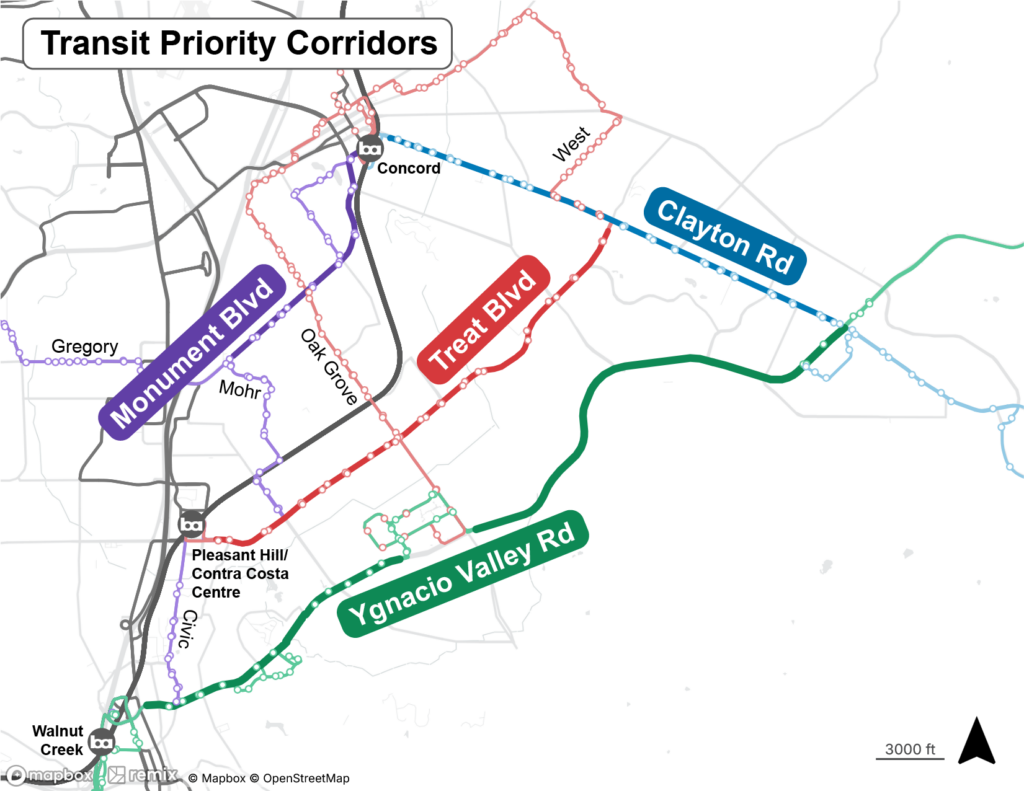
County Connection has completed a major Transit Corridor Study focused on one clear goal: making bus service faster, more reliable, and easier to use along some of our busiest corridors. The study examined four key streets in central Contra Costa County: 

  • Clayton Road (Routes 10, 15, 310, 315): Served by County Connection’s second-highest ridership route. 
  • Monument Boulevard (Routes 14, 16, 314): High transit propensity, serving an Equity Priority Community and an SB 535 Disadvantaged Community. 
  • Treat Boulevard (Routes 7, 11, 14, 15, 311): Serves multiple schools and retail destinations. 
  • Ygnacio Valley Road (Routes 1, 92X, 93X, 301): A congested corridor with healthcare, employment, retail, and some high-density housing, offering strong potential for transit development. 

As traffic congestion has increased in recent years, buses have experienced longer and less predictable travel times. Riders told us they feel the impact: missed connections, inconsistent arrival times, and frustration when trips take longer than expected. This study was designed to understand exactly where delays occur — and identify practical, cost-effective solutions to fix them. 

What information did our survey find? 

The analysis showed that each corridor faces different challenges. Ygnacio Valley Road experiences the longest delays per trip because of heavy congestion and long waits at intersections. Treat Boulevard and Monument Boulevard have the highest overall passenger delay, meaning the greatest number of riders are affected by slowdowns. Clayton Road experiences steady, moderate delays, especially near major intersections. 

One important takeaway is that transit challenges are not the same everywhere. Each corridor needs targeted improvements based on how and where delays occur. 

Just as importantly, riders shared that reliability matters as much as speed. In our survey of more than 330 community members, people consistently emphasized the importance of dependable schedules, smooth BART connections, and safer, more accessible bus stops. Faster trips are important — but predictable service and a comfortable waiting environment matter just as much. 

What will make the biggest difference? 

The study found that traffic signals are one of the biggest causes of delay — and one of the biggest opportunities for improvement. 

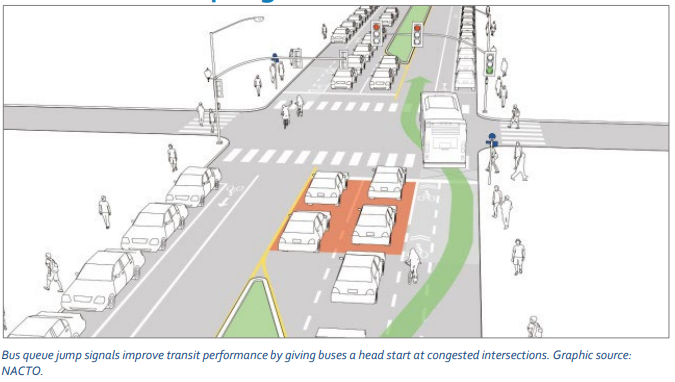
When buses stop at multiple red lights or get caught in long lines at intersections, travel times quickly add up. Adjusting signal timing, coordinating signals along entire corridors, and adding Transit Signal Priority (which allows buses to communicate with traffic signals to extend the green or shorten the red) can significantly reduce those delays. In some locations, adding short “queue jump” lanes (which let buses jump ahead of cars at traffic signals) or part-time bus-only lanes can help buses move ahead of traffic. These types of improvements consistently showed the strongest benefits in our analysis. 

If fully implemented, the recommended improvements could reduce travel times by approximately 1½ to 4 minutes per trip on Clayton Road, Monument Boulevard, and Treat Boulevard — and up to 6 minutes per trip on Ygnacio Valley Road. While that may not sound dramatic at first, those minutes add up quickly across thousands of riders every day. More importantly, they create more reliable schedules and fewer missed connections. 

Changes will happen in phases 

The study outlines a clear roadmap for moving forward. The greatest improvements occur when strategies are combined. Updating signals, improving bus stop spacing, and adding targeted bus priority improvements work together to create meaningful, systemwide benefits. This phased approach allows County Connection to begin with high-impact, cost-effective strategies while planning for larger investments over time.  

For many customers, small improvements in reliability can make the difference between catching a train on time or missing it. Over time, faster and more dependable service can also encourage more people to choose transit.  

What happens next? 

With the study complete, County Connection will begin working with local cities and partner agencies to refine designs, coordinate with planned roadway projects, and pursue funding for implementation. Signal-focused improvements will likely move forward first because they offer strong benefits relative to cost. 

By combining technical analysis with rider feedback, County Connection is focused on delivering faster trips, more reliable schedules, safer stops, and stronger connections to BART and the broader community. As projects advance, County Connection will continue communicating with riders and the community to share updates and next steps. 


Do you have questions or thoughts on this article you’d like to share? Email planning@cccta.org and we’ll be glad provide a response or hear what you have to say.

Ask Andy: What fuels our buses? 

Have you ever wondered what actually powers a County Connection bus? Our fleet includes 125 buses: Eight of them are fully electric, while the remaining 117 run on diesel fuel—specifically, renewable diesel. If you’ve never heard of renewable diesel, don’t worry, we’ll break it down for you (and explain why renewable diesel is a big step towards a zero-emission fleet). 

Unlike traditional diesel, which is made from petroleum, renewable diesel is made from natural, renewable sources like oils and fats from plants and animals. In the fuel industry, these materials are sometimes called feedstocks. The important thing to know is this: renewable diesel can replace regular diesel one-for-one, with no engine modifications required. That’s a big advantage. Other alternatives, like biodiesel, are typically sold as a 20% blend with regular diesel  – any more than that requires significant and often pricy engine modifications due to corrosion.  

Beyond where it comes from, renewable diesel has another major benefit—it burns much cleaner and has a far smaller ecological footprint! When taking into account the total lifecycle emissions resulting from the manufacture, transportation, and use of each fuel, renewable diesel generates about 65% fewer greenhouse gas (GHG) emissions than regular diesel. That’s a significant reduction in climate-impacting pollution. 

And greenhouse gases aren’t the only concern. Bus exhaust also contains tiny particles, called particulate matter, which can affect air quality and human health. Renewable diesel helps here, too, producing 35–40% fewer particulate emissions than traditional diesel. As a bonus, its clean-burning nature is why you’ll barely notice any exhaust smell—and why County Connection buses’ tailpipes are so clean, even after years of use.  

We believe the future of transportation is electric, however, unlike personal vehicles such as bicycles, automobiles, and pickup trucks, the technology is still evolving for large commercial vehicles like transit buses (perhaps a topic for a future Ask Andy?). County Connection’s use of renewable diesel represents a positive interim step while we move towards an electrified future. Until that day comes, renewable diesel is helping us drive cleaner, right now. And remember, any time you take the bus instead of a car, you’re helping the environment no matter what fuel is being used. 


Andrew Smith is the Director of Planning & Marketing. Do you have question about County Connection? About our buses? About our routes and service? Email asmith@cccta.org and your question might be included in a future issue of our monthly newsletter, Headways.

Ask Andy: Why does County Connection use long buses during slow periods?

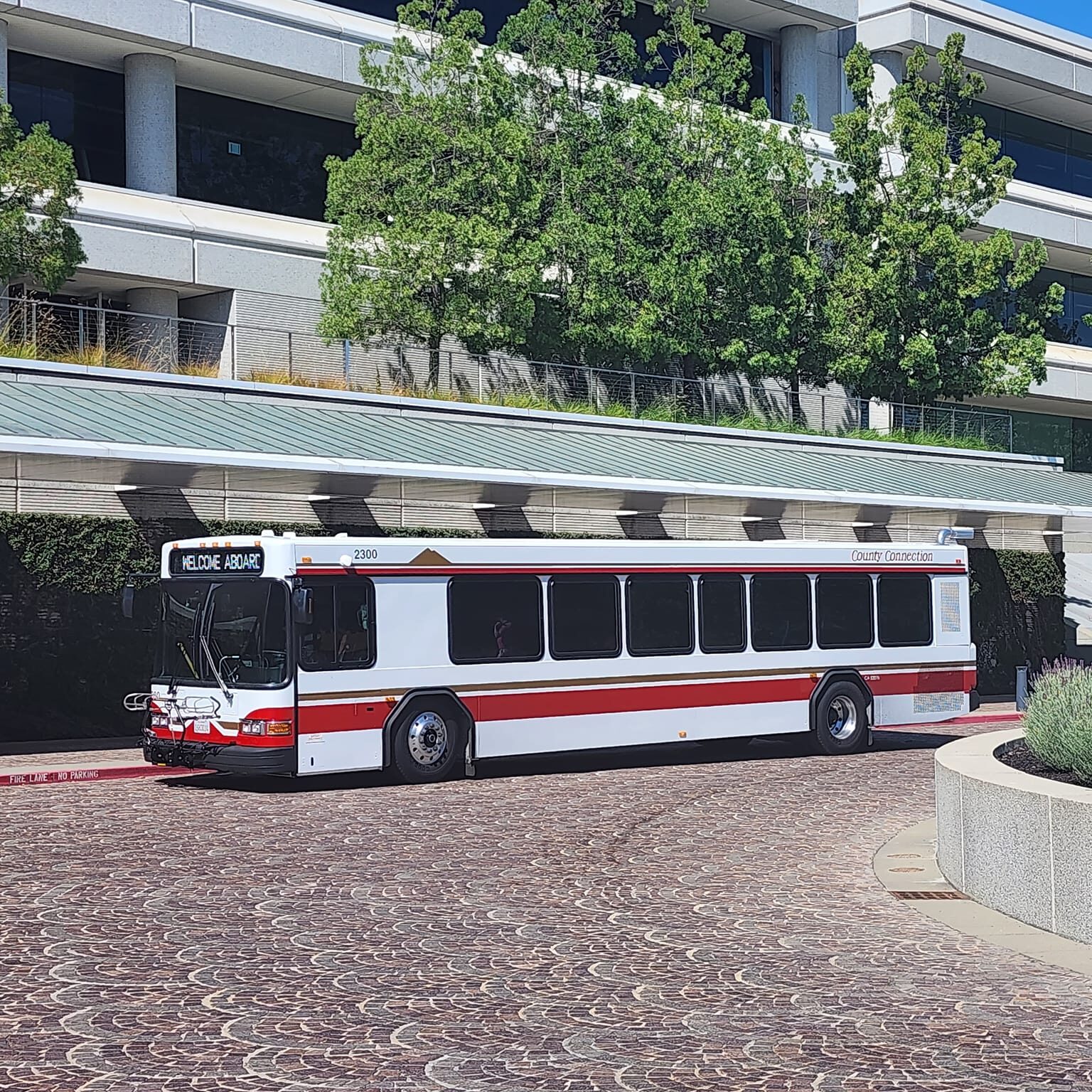
Image of a County Connection Bus

We are often asked why we don’t use our shorter buses systemwide during the quieter periods of the day, or on routes with lower ridership, to save money or fuel. The answer is more complex than it might seem! 

With very few exceptions, every route has at least one or two times a day when the bus is full, leaving room only for people to stand. On some routes this may be during the traditional morning or evening commute period, while on other routes it may be when a nearby school starts or ends its day.  As much as possible, we use buses large enough to provide a seat for every passenger during these busy periods. 

For us to swap out one sized bus for another, we would need to take the first bus and its operator out of service to drive back to our facility in North Concord, check out a new bus, and drive that one back to its route. This can be very time-consuming. In addition to the extra time and mileage for the coach exchange, we would need to send out another bus and driver to cover the route during the switch.  And remember that this would need to be done multiple times each day for most routes, and we would need to buy a lot more buses! 

The good news is that it costs us almost the same to operate a bus regardless of its length. Transit buses are generally available in four different lengths: 30, 35, and 40-foot standard buses, and 60-foot articulated buses (the ones that bend in the middle like an accordion). Two-thirds of County Connection’s fleet of 125 buses are 40-footers, with the rest being 30 or 35 feet long and used on routes with narrow streets and sharp curves. 

 Every bus needs a driver, and every bus has the same engine, two doors, and six wheels. The purchase price is also very similar, with a 40-foot bus costing only 6% more than a 30-foot bus, and fuel mileage is almost identical regardless of the length of bus. Don’t forget too that the more people who ride the bus, the fewer cars on the road and less fuel used. In short, keeping standard-sized buses on the road ensures consistent service and efficiency throughout the day. So next time, take the bus! 


Andrew Smith is the Director of Planning & Marketing. Do you have question about County Connection? About our buses? About our routes and service? Email asmith@cccta.org and your question might be included in a future issue of our monthly newsletter, Headways.

Realignment, Improvements to Walnut Creek’s Route 4 

UPDATE: Route 4 service adjustments will be pushed back, taking effect on March 29, 2026.

County Connection is making a significant realignment and service enhancement to Route 4, the Walnut Creek “Downtown Trolley”, marking the first major redesign of the route in over two decades. The improvements are designed to streamline operations, enhance reliability, and provide more frequent service to support growing mobility needs in downtown Walnut Creek. 

For decades, Route 4—originally launched as Route 104—has served as a vital connector between Walnut Creek BART and the downtown core. Operated in partnership with the City of Walnut Creek, the service has long been fare-free and is often served by County Connection’s prototype Gillig electric trolley-themed buses. 

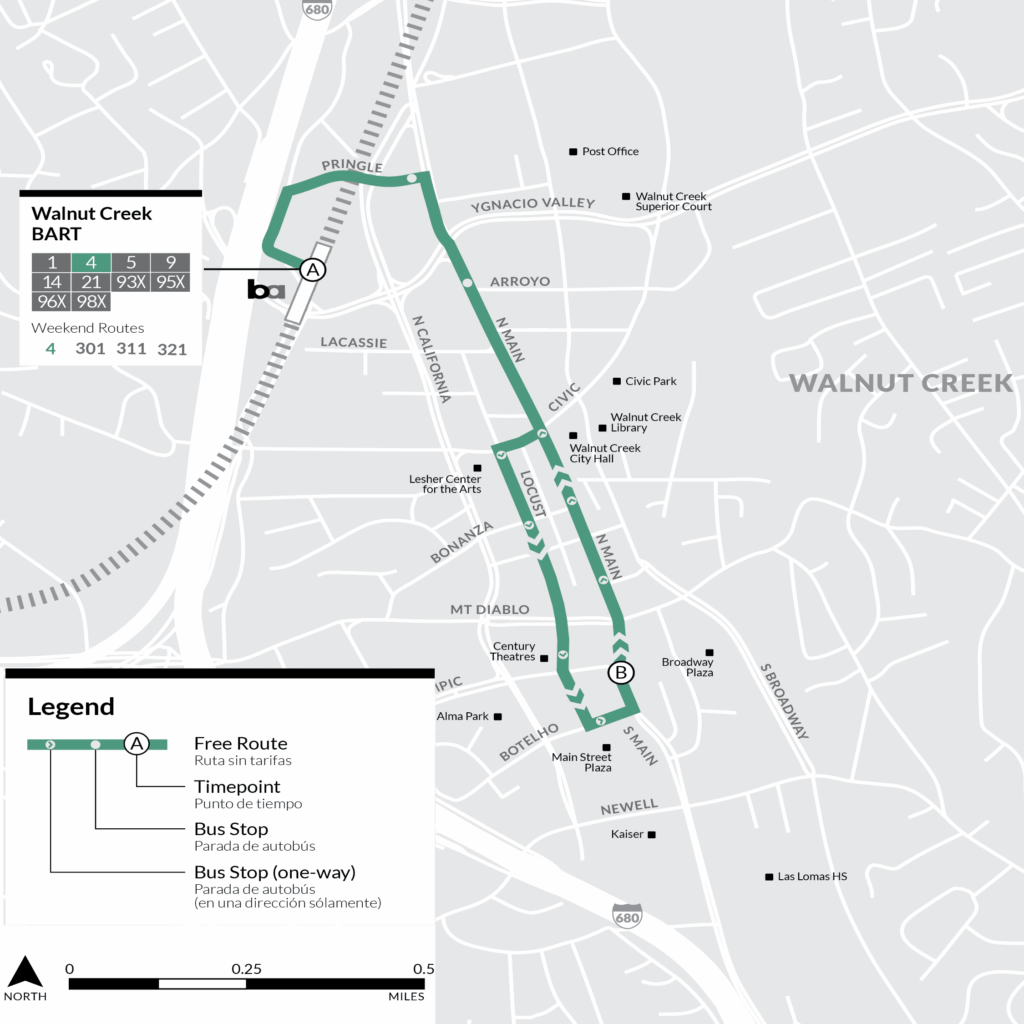
Image of the newly redrawn Route 3 service map.

Over the years, increasing traffic congestion, the addition of a figure-8 routing with the construction of Plaza Escuela in the early-2000s, and temporary routing changes made during the COVID-19 pandemic have created delays and reduced available charging time for the route’s battery electric bus fleet. To address these challenges, County Connection staff presented a proposal in 2025 to realign the route, optimize stop spacing, and take advantage of existing pedestrian infrastructure and the City of Walnut Creek’s transit signal priority (TSP) system, which gives more green lights to our buses. 

In addition to a new alignment, Route 4 will soon run every 15 minutes (previously every 20 minutes) on weekdays from 7 a.m. to 9 p.m.—an improvement funded through an Affordable Housing and Sustainable Communities (AHSC) Grant awarded in partnership with the City of Walnut Creek and Resources for Community Development for the Civic Crossing affordable housing development now under construction at 699 Ygnacio Valley Road. The grant provides up to $4.15 million to support increased bus frequency for approximately five years. 

“Route 4 has been a cornerstone of mobility in Walnut Creek for decades,” said Bill Churchill, County Connection General Manager. “This realignment ensures the service can continue to meet the needs of residents, workers, and visitors while improving reliability.” 

As part of County Connection’s federal responsibilities under Title VI of the Civil Rights Act, a major service change analysis was conducted to ensure the proposal does not disproportionately impact minority or low-income riders. The Title VI Service Equity Analysis found no disparate impacts or disproportionate burdens and projected a net increase in service for both groups. 

Public outreach efforts began in September 2025, including opportunities for riders to provide feedback via email, mail, and online. A public hearing was held on October 16, 2025, prior to the County Connection Board of Directors meeting. All feedback received wasincorporated into the final Title VI report submitted to the Federal Transit Administration. 

Planned changes to Route 4 will begin on January 11, 2026. (Update: Route 4 service adjustments will be pushed back, taking effect on March 29, 2026.) “Changing any route or service is an enormous endeavor,” explained Andrew Smith, Director of Planning & Marketing, “and one that takes a lot of thoughtful coordination between County Connection, the City, various funding sources, and the public.” 

This realignment ensures that Route 4 remains a dependable and accessible link for everyone traveling through downtown Walnut Creek. 


County Connection Prepares for Rollout of Clipper 2.0 – The Bay Area’s Next Generation Fare System 

County Connection joins the Metropolitan Transportation Commission (MTC), BART, and transit partners across the Bay Area in preparing for the launch of Next Generation Clipper (Clipper 2.0) — a major upgrade to the region’s contactless fare payment system. The new system officially goes live on December 10, 2025, beginning an 8–12-week transition period that will bring faster, more flexible, and more connected fare payment options to riders. 

Clipper, managed by MTC and accepted by 24 Bay Area transit agencies, has been a cornerstone of regional travel for decades. County Connection was one of the earliest adopters, partnering with BART on a pilot in 1993 that used paper mag-stripe tickets. Today, 81% of County Connection fares are paid using Clipper—one of the highest adoption rates in the region, behind only BART and Golden Gate Ferry. 

What’s New with Clipper 2.0 

The upcoming Clipper 2.0 system represents a complete modernization of the region’s fare network, including new hardware, software, and customer tools. Among its many improvements: 

  • Cloud-Based System & Instant Value: 
    Stored value and passes will now be kept in the cloud rather than on the card itself. Riders will be able to use added funds instantly, eliminating current delays of up to five days when reloading online. 
  • Tap and Ride Convenience: 
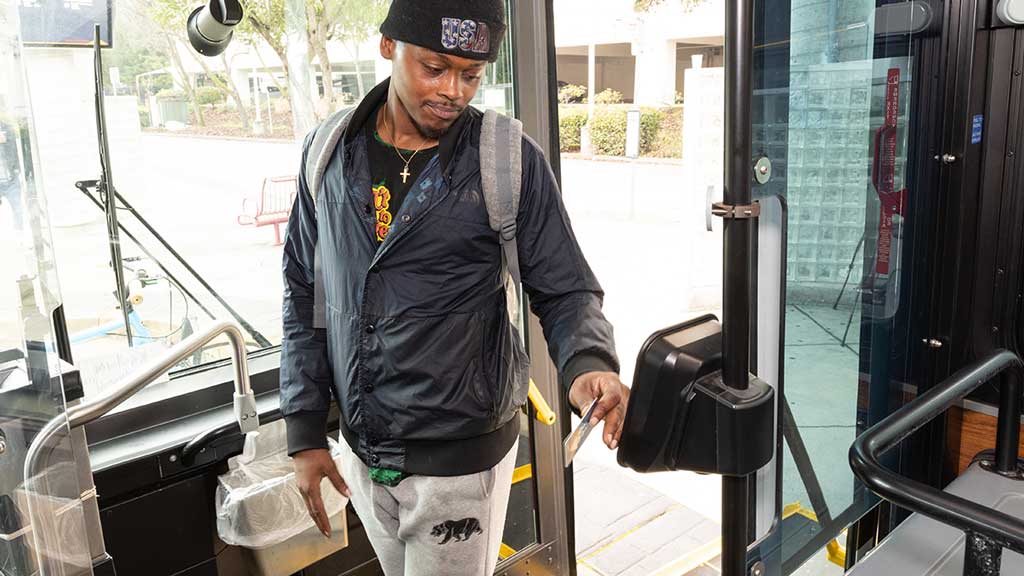
    Riders will be able to pay adult fares directly using contactless credit or debit cards or mobile payment methods such as Apple Pay or Google Pay—no Clipper card required. County Connection riders can tap their phone, watch, or card to board, joining BART as part of the Bay Area’s growing Tap and Ride network. 
  • Seamless Interagency Transfers: 
    For the first time, passengers transferring between any Bay Area transit agencies will receive a transfer discount of up to $2.85 within a two-hour window. For example, a rider traveling from San Francisco State University to Diablo Valley College via Muni, BART, and County Connection will now receive transfer discounts across each leg of the trip—potentially riding County Connection for free. 
  • Family Management: 
    Clipper’s new app will allow families to manage multiple Clipper cards from a single device. 
  • Online Youth and Senior Cards: 
    Riders will soon be able to apply for youth and senior Clipper cards online, streamlining access to regional discounted fares. 
  • Institutional and Promotional Passes: 
    County Connection will gain flexibility to administer multiple institutional pass programs through Clipper, such as the Bishop Ranch ECO Pass currently used by Bishop Ranch employees. 

County Connection’s Preparation Efforts 

County Connection has spent the past two years preparing for the transition: 

  • All buses are now equipped with Clipper 2.0-ready card readers, and staff training on the new Customer Service Terminal is underway. 
  • County Connection has worked with MTC on an interagency transfer pilot, ensuring riders will receive discounts across agencies beginning in December. 
  • County Connection staff and MTC are collaborating with Sunset Development (owner of Bishop Ranch) to migrate the ECO Pass program into the new system. 

What Riders Need to Know 

  • Card Upgrade Timeline: Beginning December 10, existing Clipper cards will be upgraded to the new system over 8–12 weeks. Riders can speed up the process by logging into clippercard.com, using the Clipper app, or calling Clipper Customer Service (877.878.8883) to initiate the upgrade manually. 
  • Avoiding “Card Clash”: With multiple contactless payment options, riders should remove their Clipper or bank card from their wallet or purse when tapping to ensure the correct card is charged. 

County Connection’s Marketing team will work closely with MTC on an outreach campaign to educate riders about these changes through social media, onboard signage, newsletters, and digital screens. 

Looking Ahead 

“The Clipper system connects all the public transit systems in the Bay Area together using one fare card to go anywhere,” said Bill Churchill, County Connection’s General Manager. “Clipper 2.0 will make riding transit convenient, simple, and more connected than ever before.”  

For more information on Clipper 2.0, visit www.clippercard.com.